Key Takeaways
- 55% of family caregivers perform medical and nursing tasks such as injections, wound care, and catheters.
- 65% of family caregivers help with Activities of Daily Living (ADL) such as bathing, dressing, and toileting.
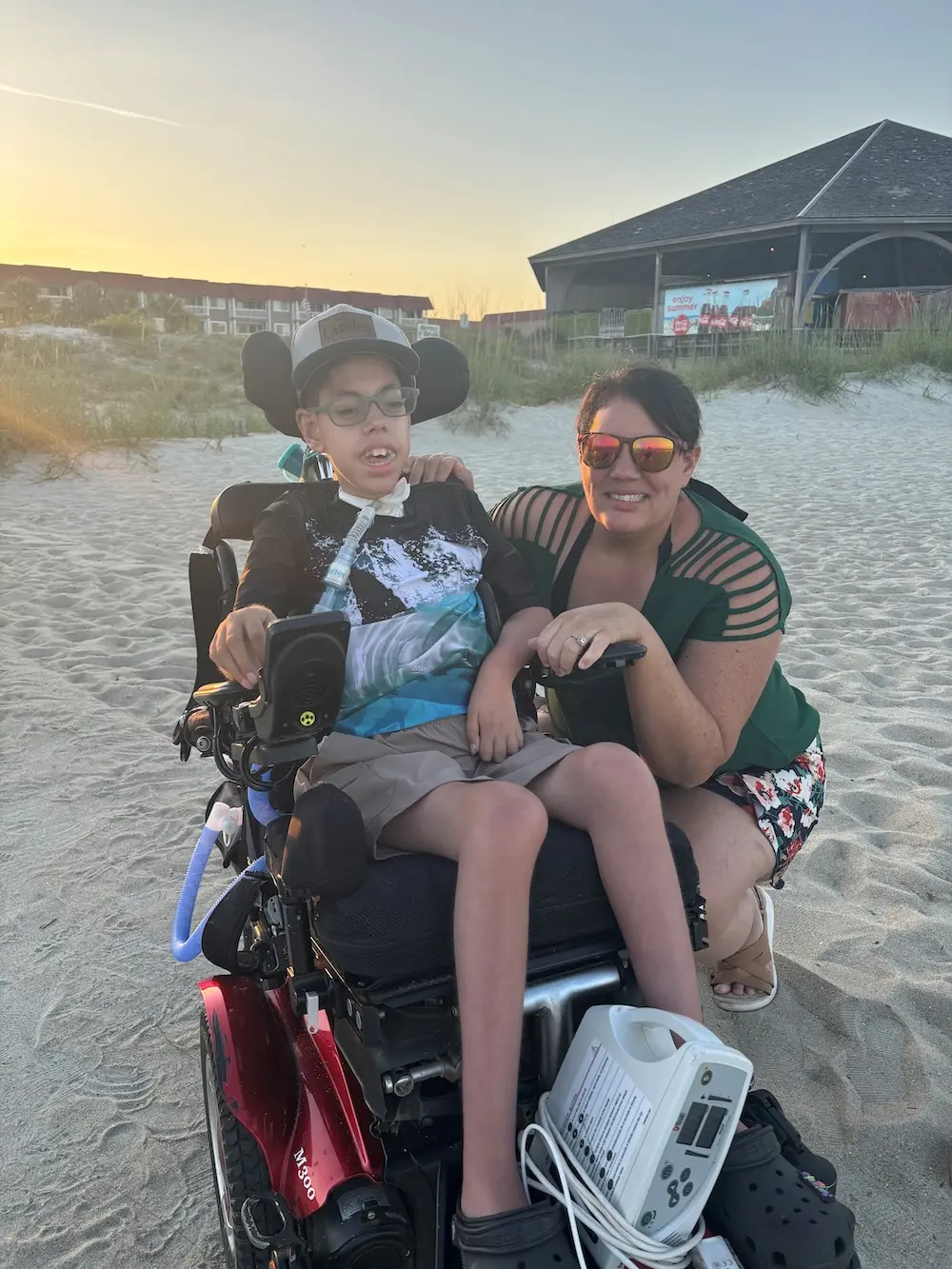
Brittany’s son, Camden, has cerebral palsy. He is trach dependent, G-tube dependent, non-ambulatory, and communicates with an assisted communication device. Brittany is his primary caregiver. Every day, she provides typical nursing activities like moving him from place to place, using the restroom, bathing, administering medication, communicating with his doctors and keeping a 24/7 watch over his breathing. Brittney is also an elementary school teacher.
Through Medicaid, Camden qualifies for GAPP (Georgia Pediatric Program) care, which provides skilled nursing by a direct care worker (DCW). The DCW supports Camden in the same ways that Brittany normally does. In addition, the DCW is required to attend school with him, which gives him access to education and socialization, and gives Brittany a break from routine care.
It takes a lot to ensure that a DCW fits into their family life and is right for Camden. A few years ago, their DCW suddenly passed away, and it took a year to find a replacement. In that time, Brittany took on Camden’s care entirely, transferring him to the school where she worked. She provided care to Camden while also teaching. During this time, her blood pressure rose so dangerously high she had to make a choice – keep teaching and risk her life or temporarily leave teaching to fully care for Camden. She chose to provide care for Camden, but this decision put their family at financial risk.
During the year without the DCW, Brittany was able to apply for and receive a stipend through Medicaid. The amount equaled pay for providing 16 hours of care per week. This stipend has allowed their family some financial relief. Without Medicaid, Brittany would have to leave her job permanently, straining their normally two-income household to the extreme. She would receive no break from providing care, affecting her emotionally, mentally, and physically.
Brittney is a family caregiver from Georgia. Her story was collected as a part of the National Alliance for Caregiving Medicaid Makes Care Possible Campaign.